 1926HURRICANE.COM
Primary documents reading room
This reading room brings together original letters, government reports, municipal publications and pictorial records. Each object is identified by its holding institution, date and historical context so visitors can move directly from the exhibition narrative to the evidence.
Kaye's hurricane letter — scans + readable transcript
The complete 24-image State Archives presentation is now preserved locally in this build. Because the cursive can be difficult to read, the exhibit pairs every original manuscript image with an accessible, paragraph-form transcription.
1926 context A handwritten letter was a primary communications technology. Personal accounts like Kaye’s carried detail that could not be captured by a short newspaper dispatch or weather observation. Reading the manuscript alongside the transcript preserves both the evidence and the slower, human scale on which experience was recorded and shared.
Source: State Archives of Florida, Collection N2013-15; identifier
n2013-15_b001_f01_01. The exhibit includes all 24 manuscript images.Open Kaye’s hurricane letter Official State Archives record ↗
Ruth Addams — hurricane relief through sixteen original pages
Travel and salary vouchers, letters written by Addams, and correspondence between the Red Cross and her Philadelphia employer reconstruct her movement through Miami, Dania, Hollywood and Fort Lauderdale. The complete hurricane sequence—National Archives objects 39–54—is preserved locally and presented in a zoomable page-turning viewer.
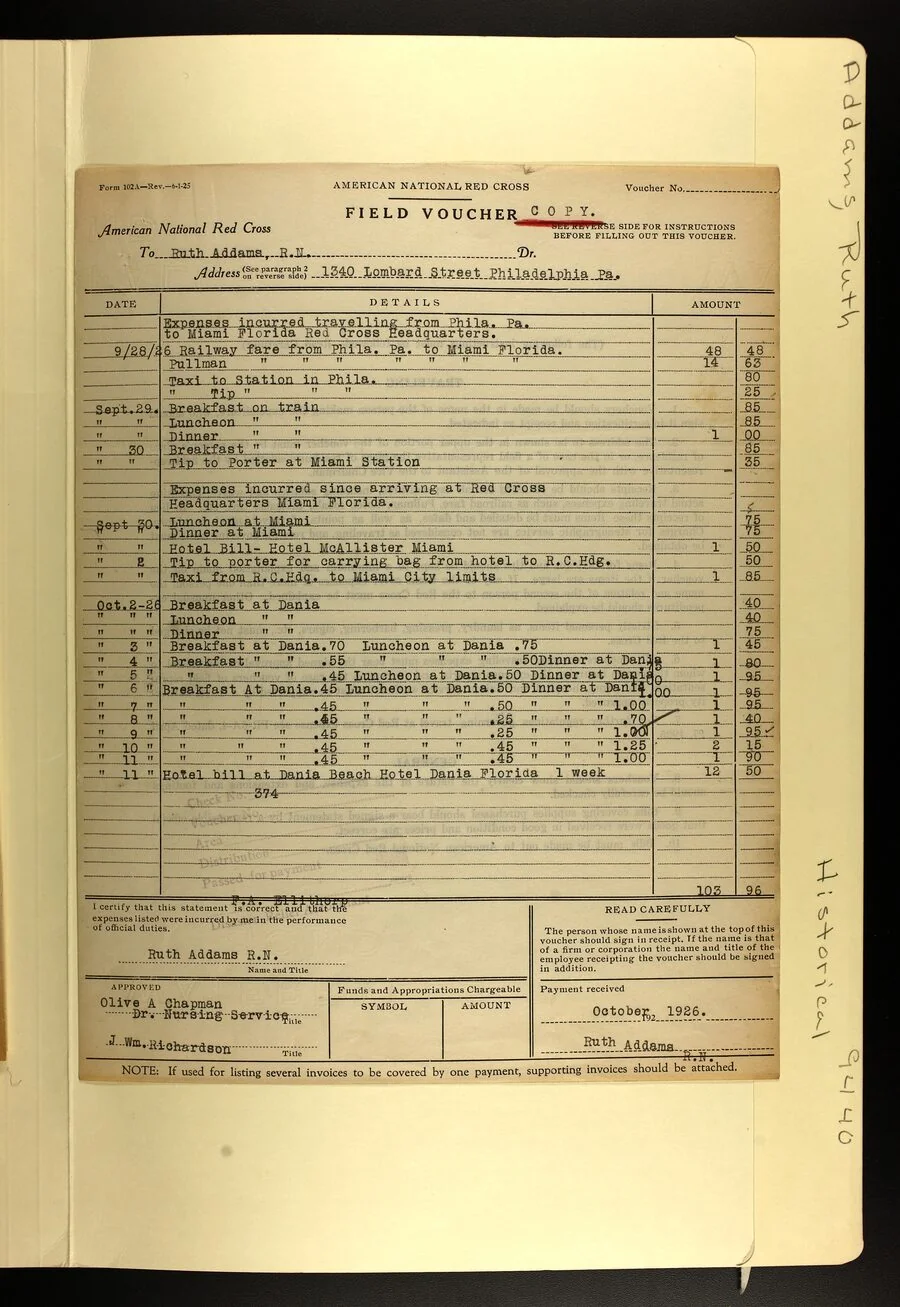
Travel and lodging
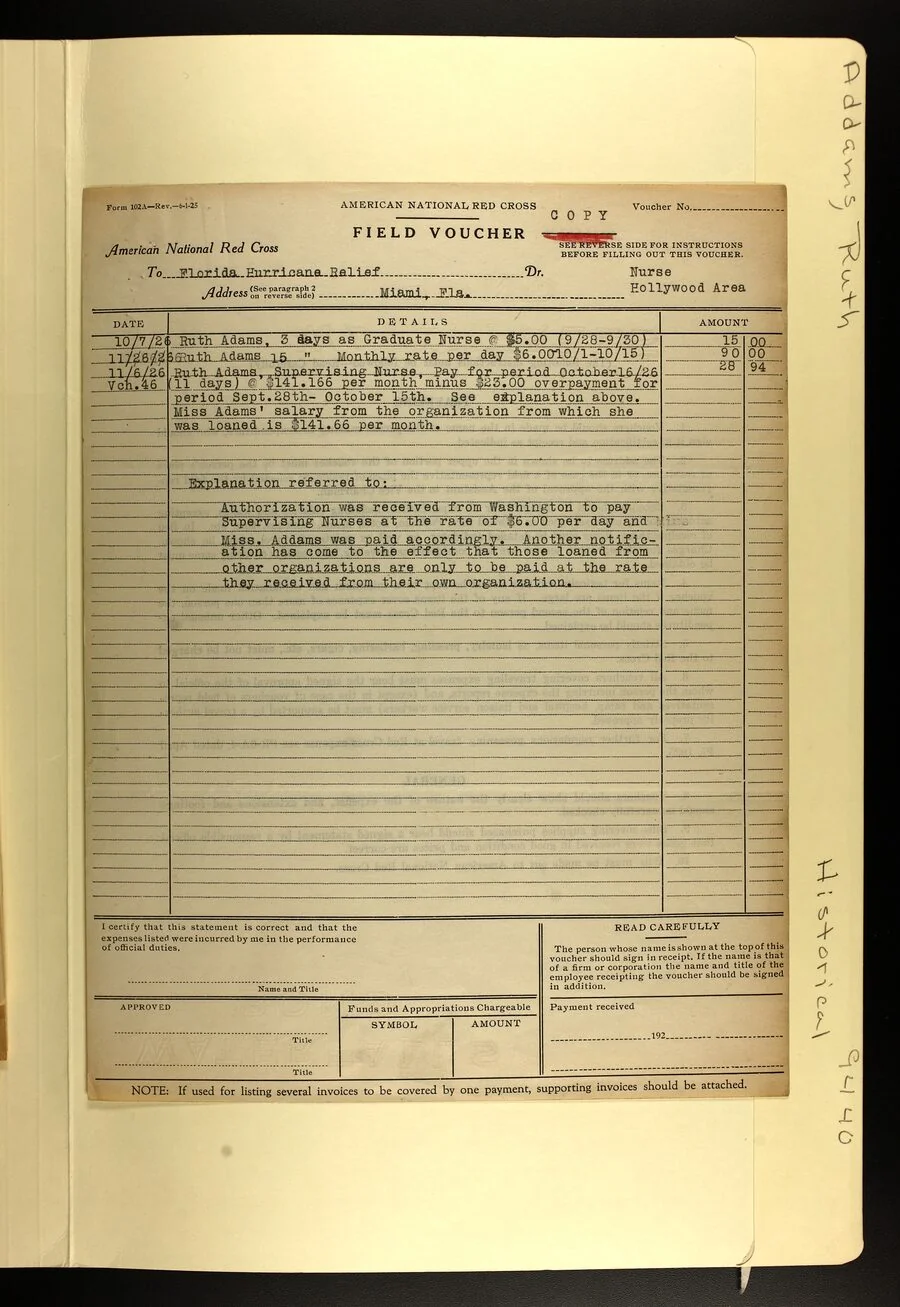
Nurse, Hollywood Area
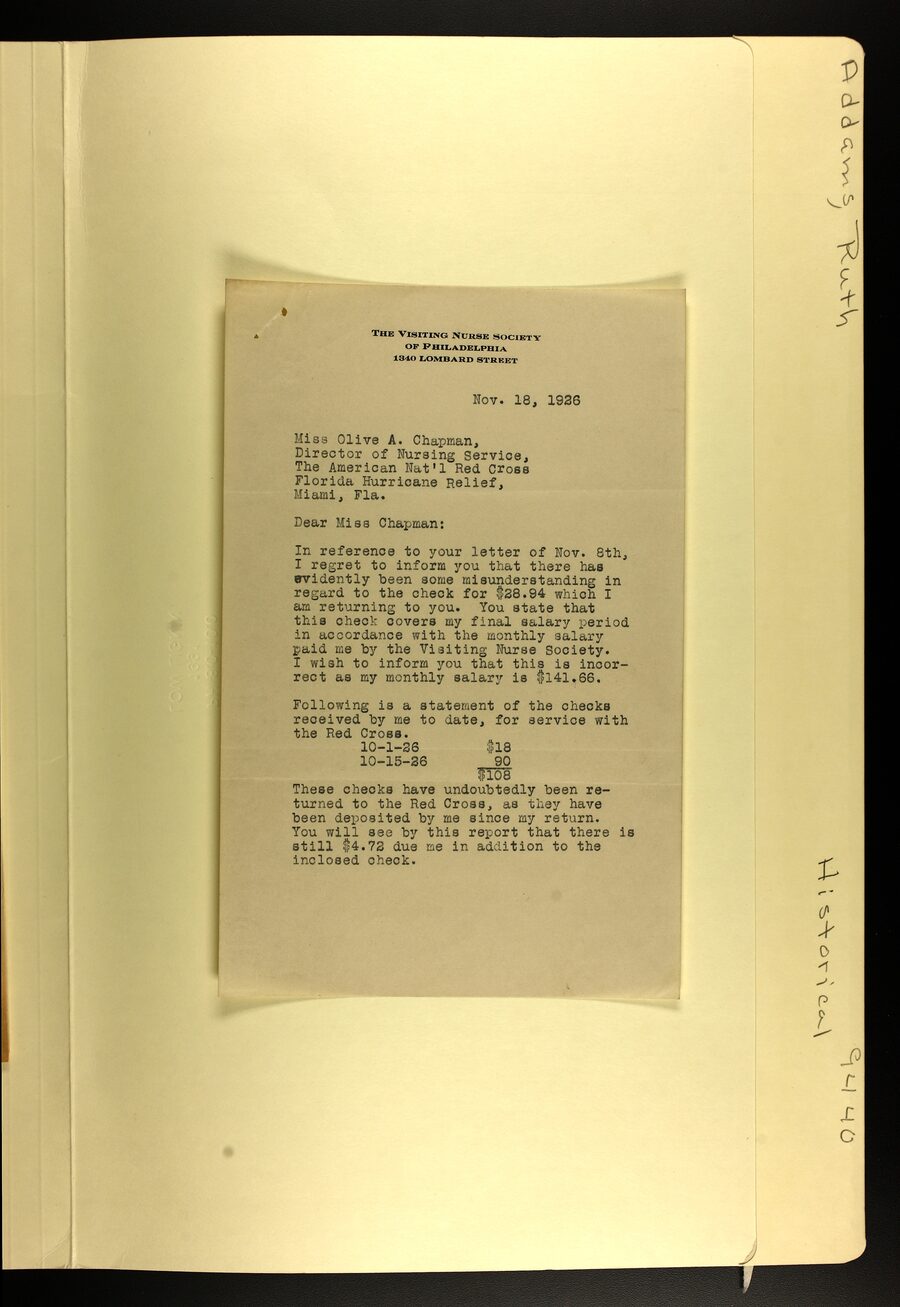
Addams writes back
Source: National Archives, Records of the American National Red Cross, Historical Nurse Files, NAID 2661012. The exhibit includes the complete 16-page hurricane sequence.
Max Chamberlain — uninsured vessel casualty
Two U.S. Coast Guard pages identify Max K. Chamberlain of 328 N.E. 35th Terrace, value the small wooden vessel at $2,500–$3,000, list no insurance, record total loss and describe the master jumping off to save himself.
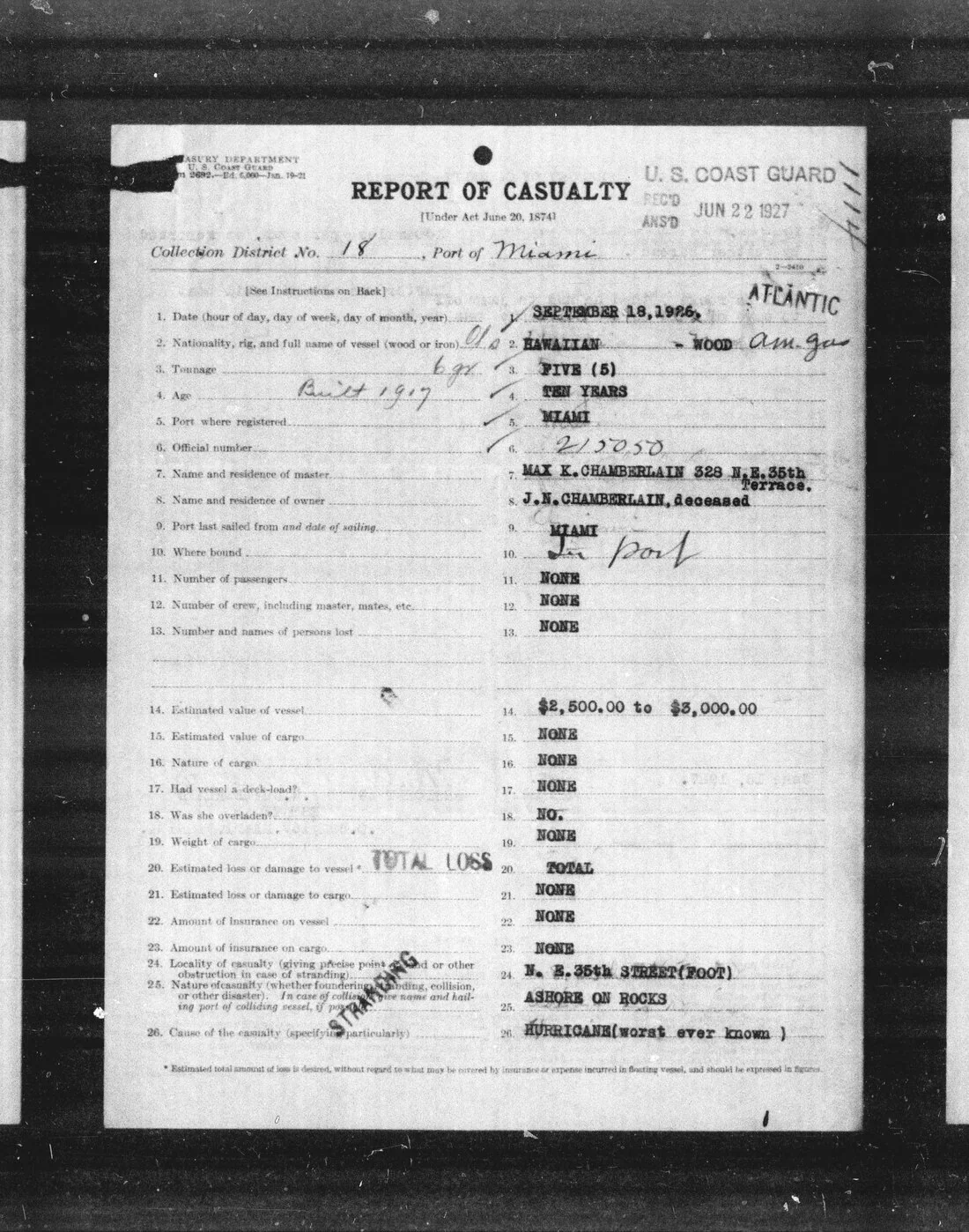
Casualty report
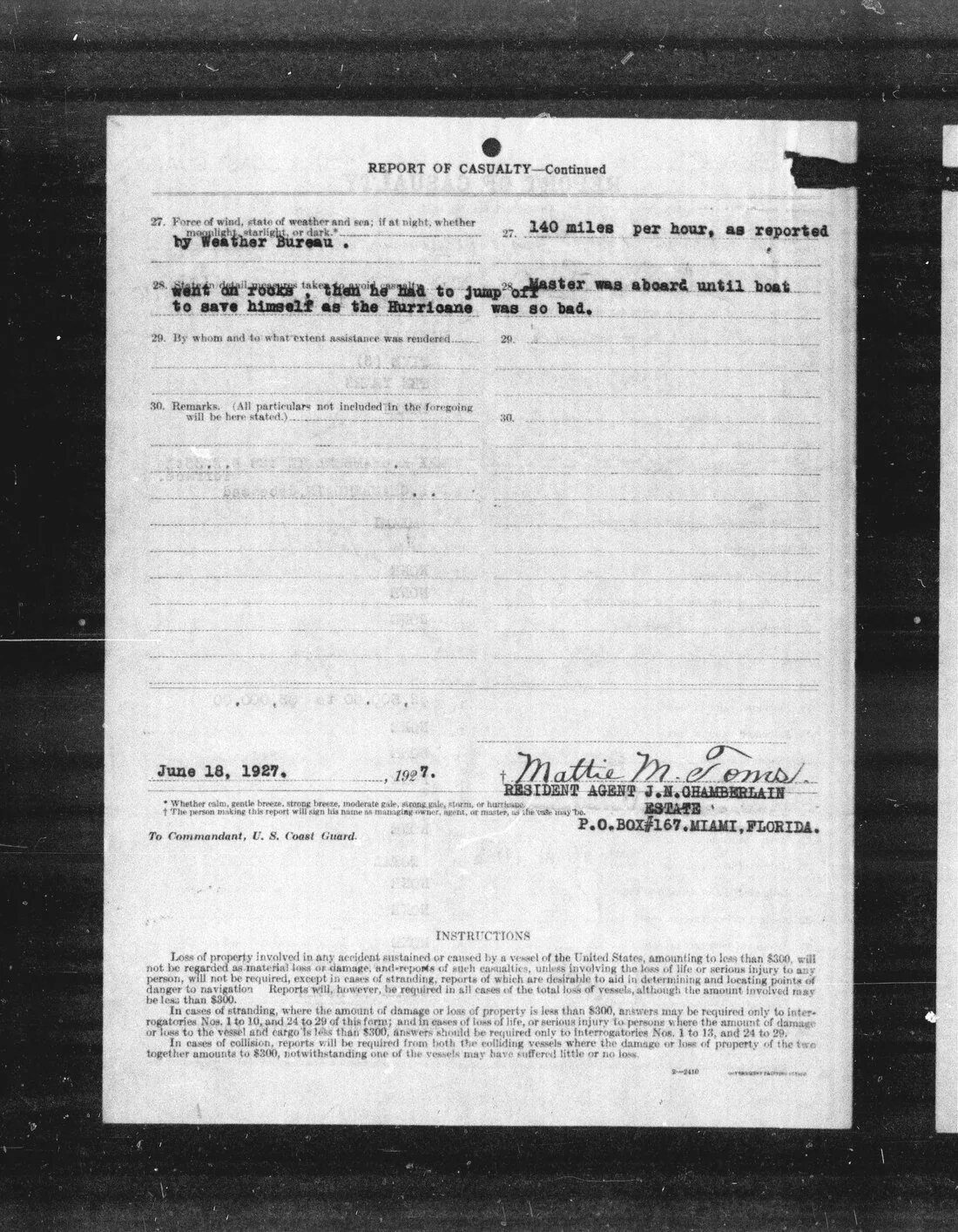
Continuation
Source: National Archives, U.S. Coast Guard Casualty and Wreck Reports, NAID 621076940, objects 2845–2846. Original TIFF masters and web-viewable derivatives are preserved locally.
Coast Guard relief from Miami to Grand Bahama — ten original pages
Four paired reports from the cutter Yamacraw document city relief, an injured schooner engineer, two Cape Florida caretakers taken to a relief hospital, and a mother and child evacuated from North Cat Key to Miami. A fifth report follows an October Red Cross medical mission from West Palm Beach to Grand Bahama.
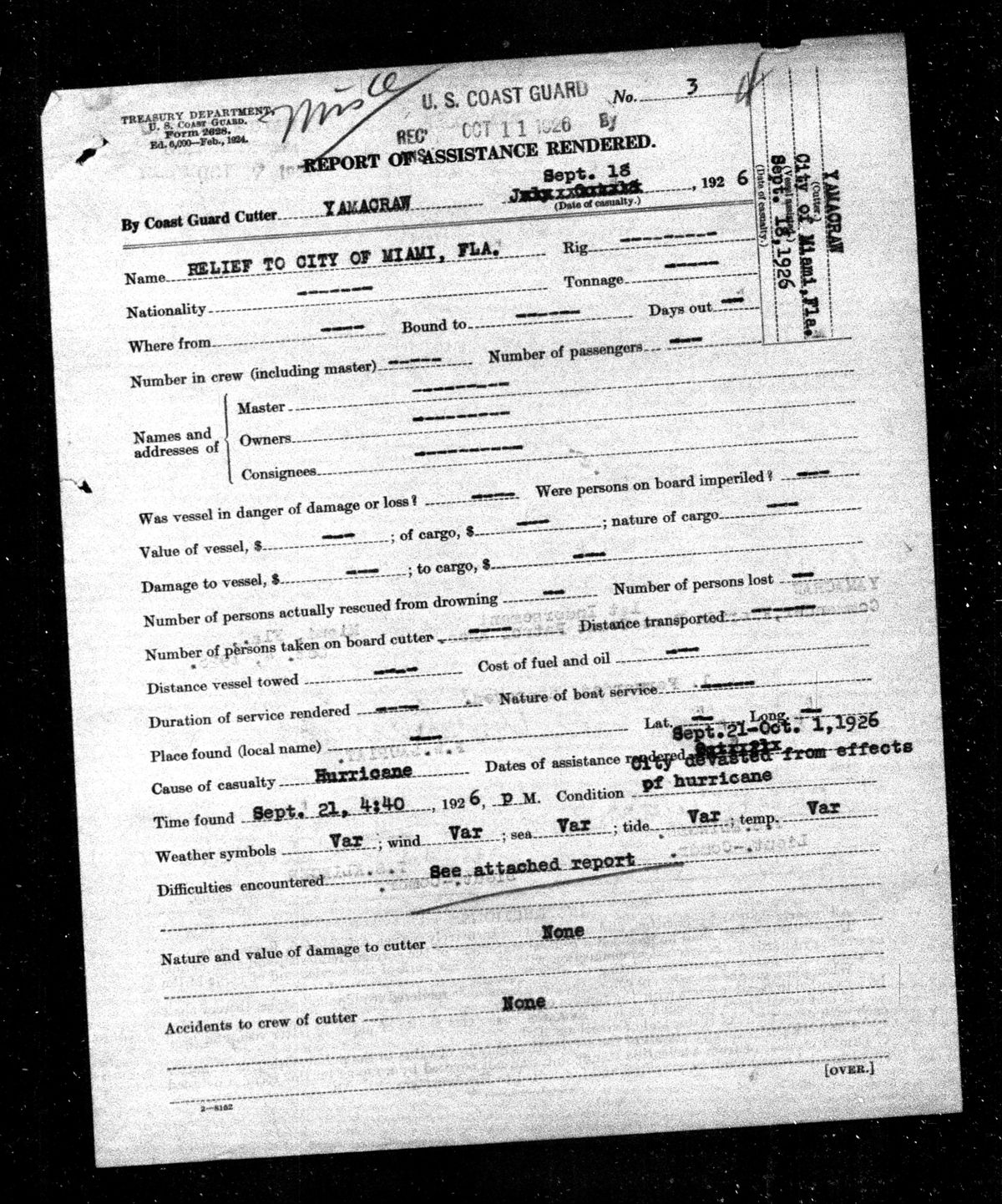
Relief to City of Miami
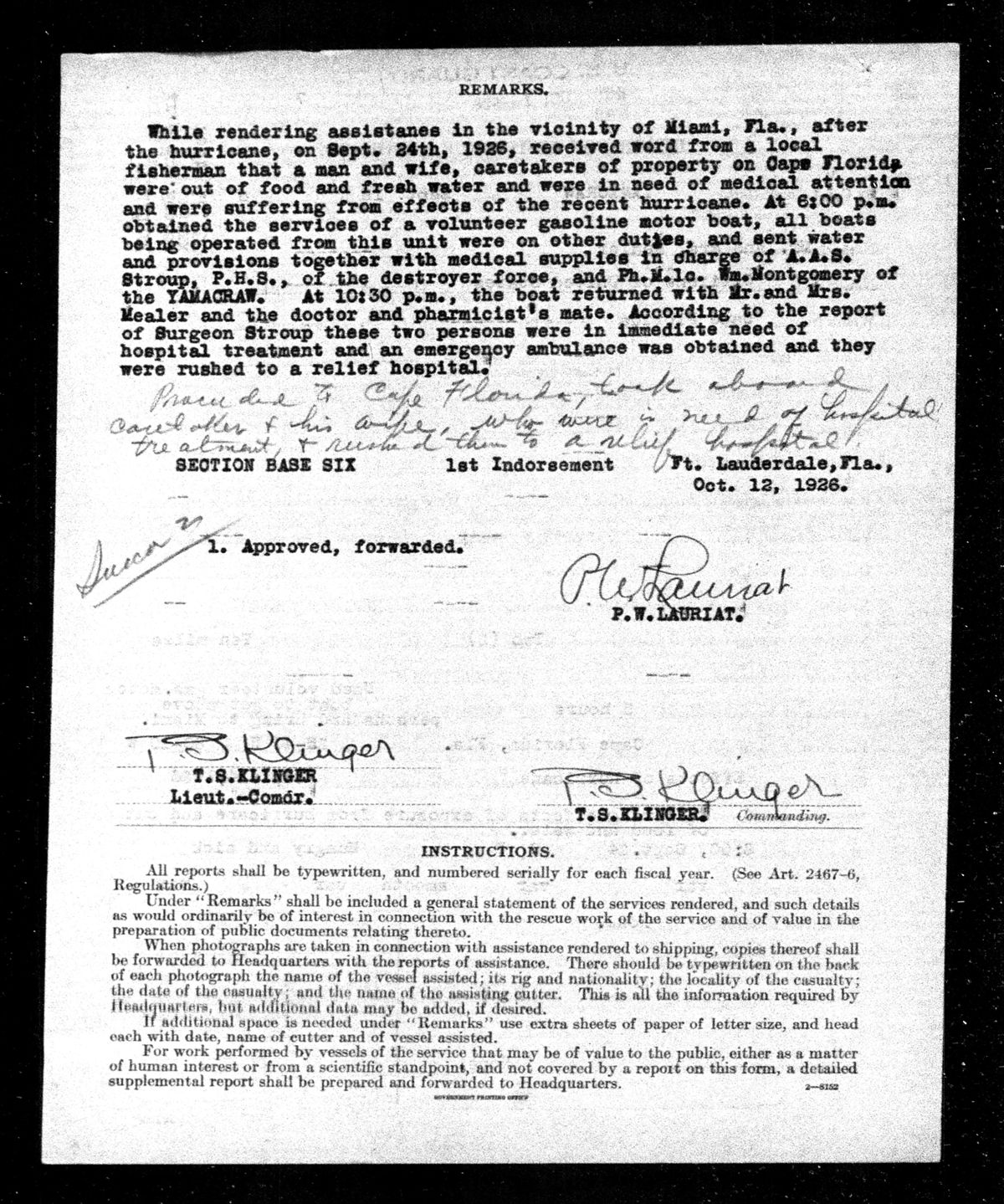
Cape Florida
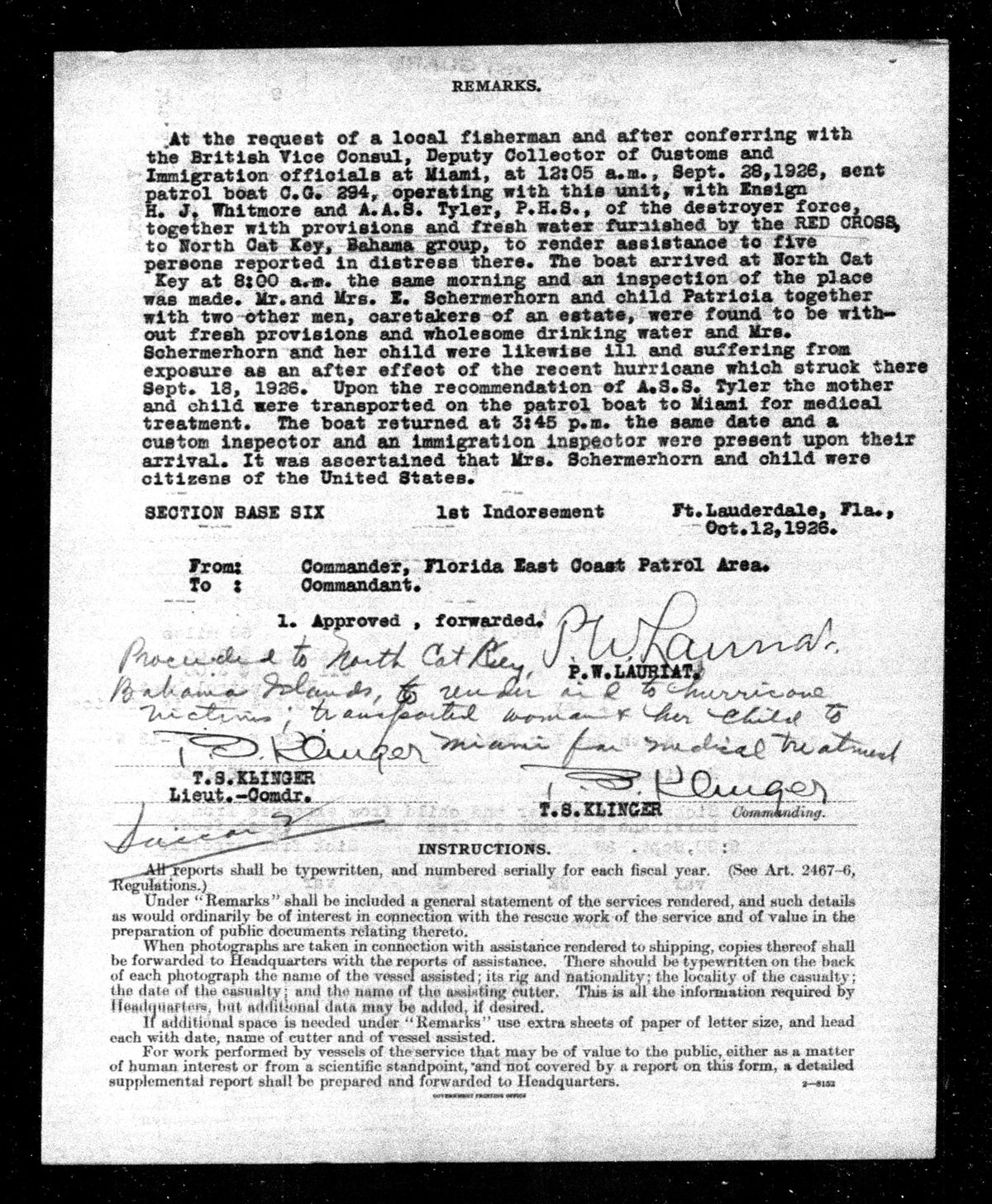
North Cat Key
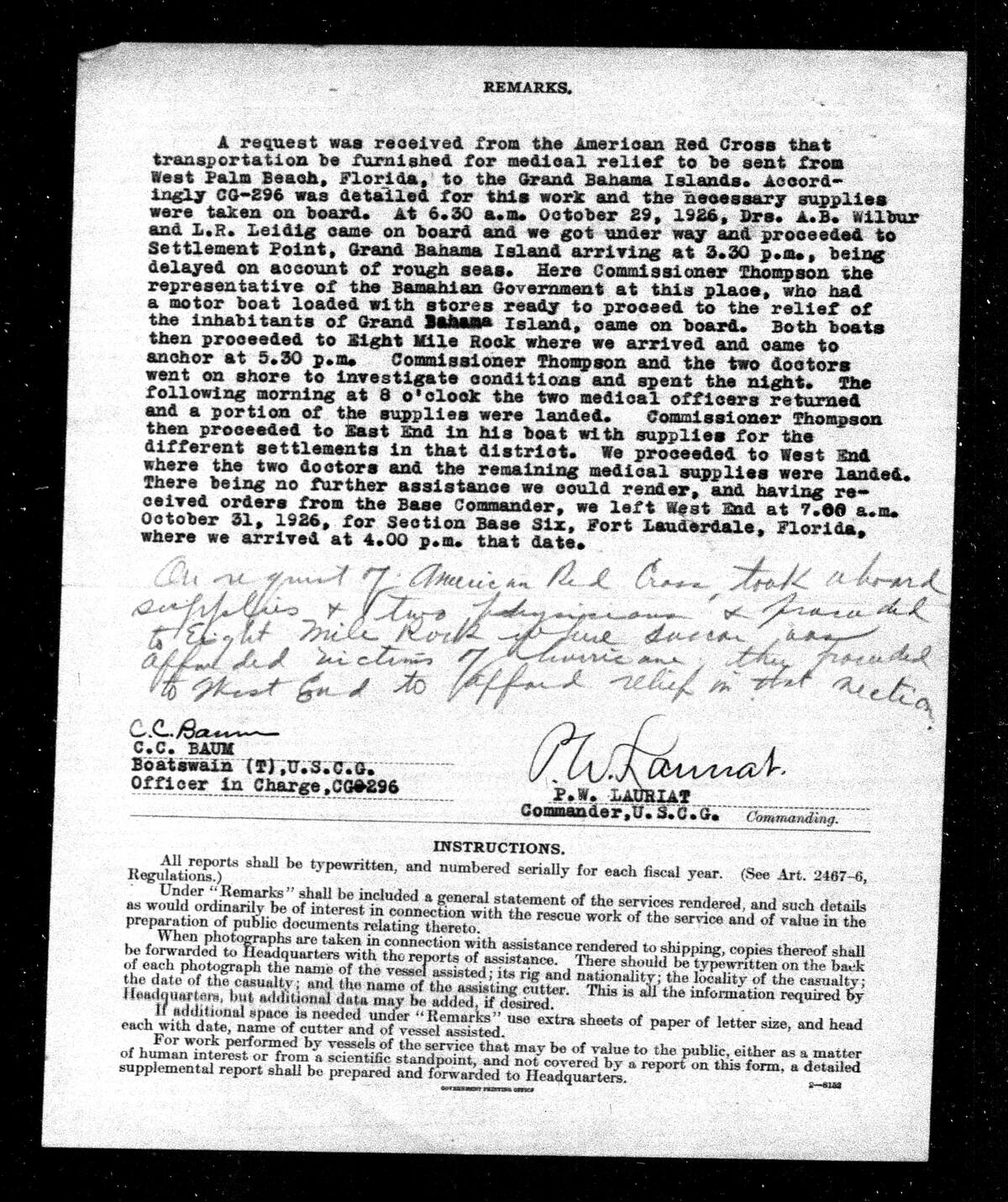
Grand Bahama
Source: National Archives, U.S. Coast Guard Reports of Assistance Rendered, T720 reels 68–69, NAIDs 583165154 and 583166475. The exhibit includes all ten pages in the two relief sequences.
Coast Guard hurricane relief Open the Miami sequence at NARA ↗ Open the Grand Bahama report ↗
Independent official cross-check: Grand Bahama Commissioner R. N. Thompson’s January 28, 1927 annual report states that two American Red Cross doctors visited nearly every settlement from Sweeting’s Cay to West End and treated 659 people, including 122 dysentery cases. The Grand Bahama Museum presentation is a modern transcription from the original—not an original scan—and is labeled accordingly.
Compare the two official records Read the museum transcription ↗
City of Miami Beach — First Annual Report, 1926
The complete 67-page City Manager's annual report for the fiscal year November 1, 1925 through October 31, 1926 is preserved locally. It documents municipal development, engineering, streets, sewers, inspections and the immediate civic context of the hurricane year.
Florida Tornado — American Autochrome Company, 1926
The locally preserved pamphlet set contains the cover and the complete substantive pictorial sequence: 16 storm photographs across the surviving interior pages/spreads. The University of Miami institutional record remains linked for catalog metadata.
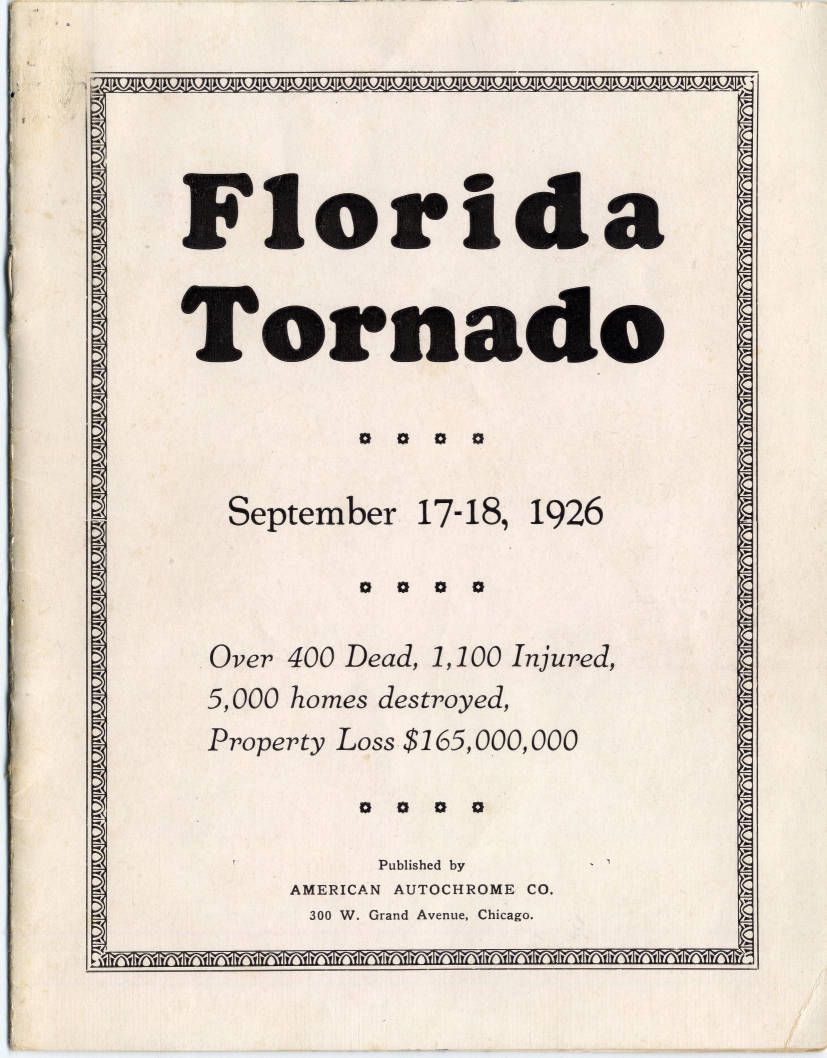
Cover
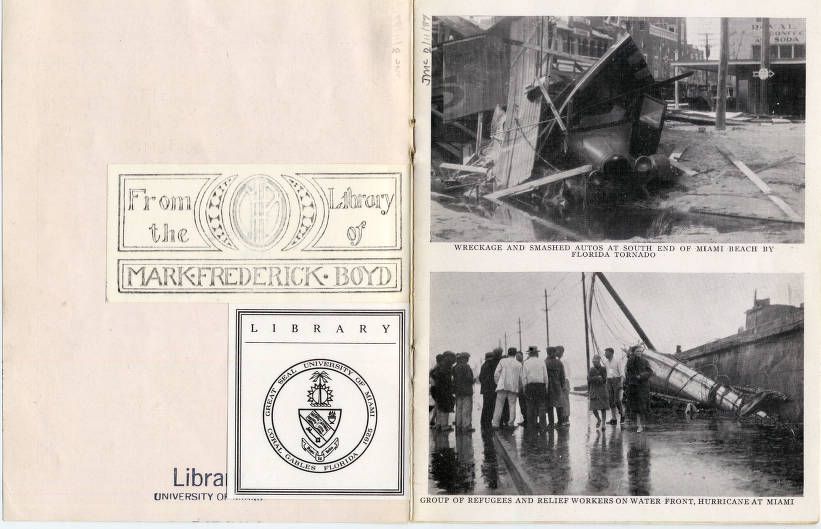
Interior page
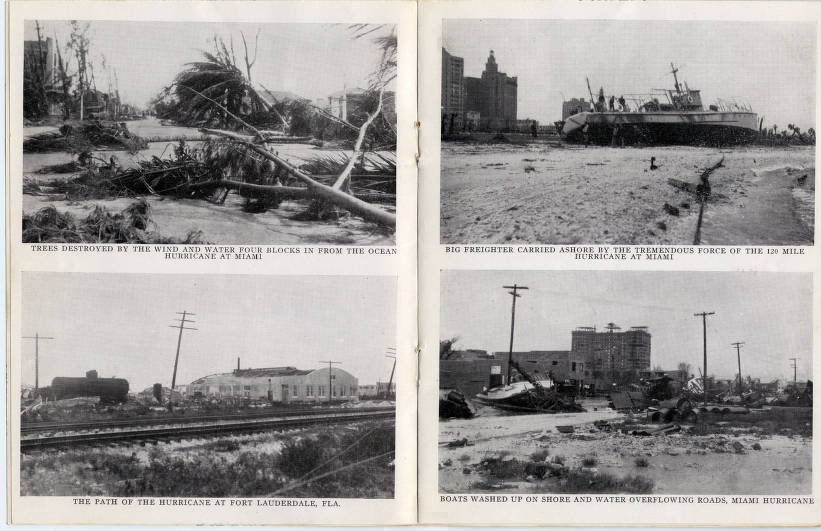
Interior spread
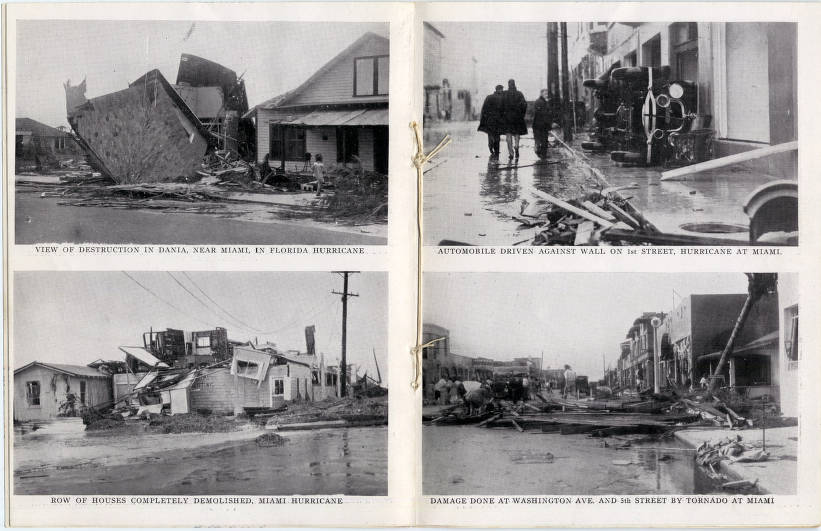
Interior spread
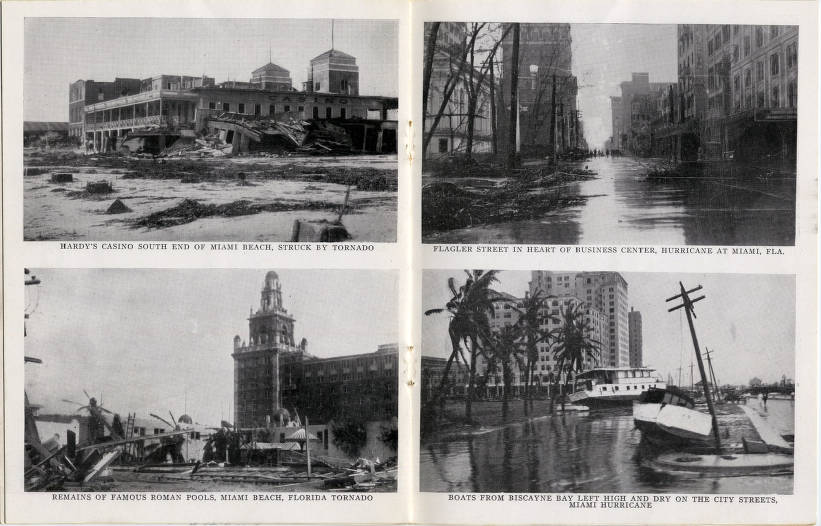
Interior spread
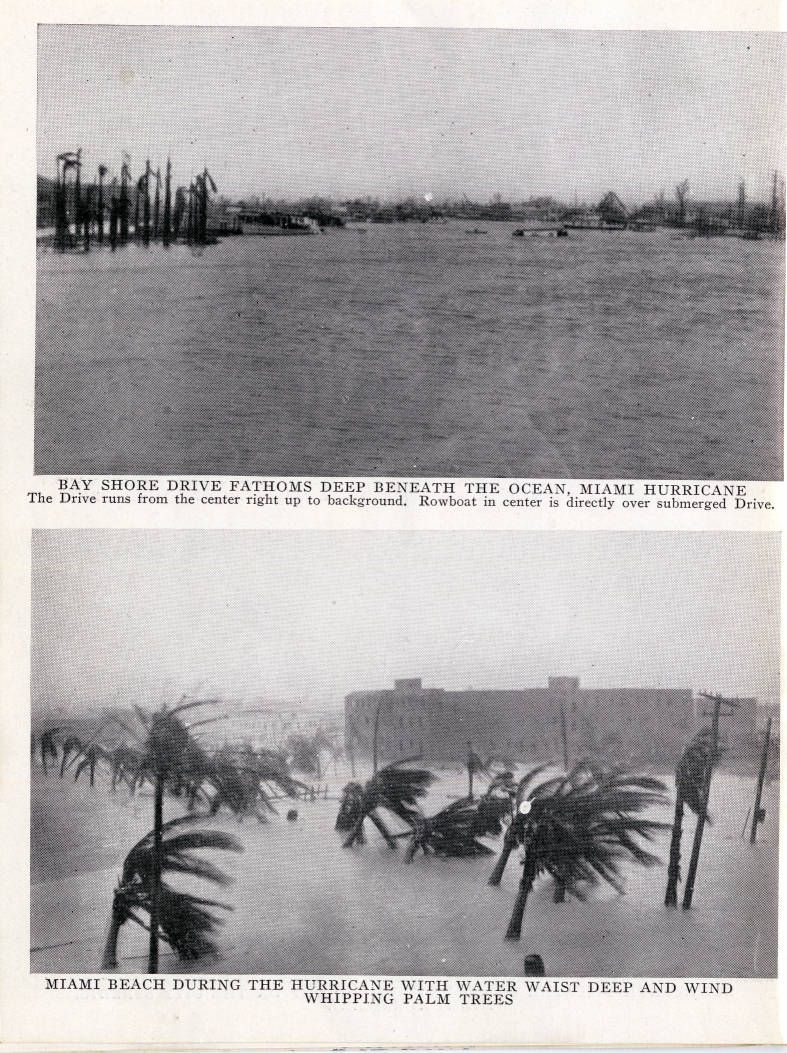
Final preserved spread
View the cover + 16 photographs in the museum viewer University of Miami record ↗
Official Miami Weather Bureau record
Richard W. Gray's Monthly Meteorological Notes for September 1926 are available as three high-resolution scans through NWS Miami. These are primary federal records describing the barograph, anemometer failures, eye passage, storm tide and damage.
Weather Bureau Record - page 1
Weather Bureau Record - page 2
Weather Bureau Record - page 3
Leila Holmes — a Black religious memory of the hurricane
The Federal Writers’ Project recorded Holmes in 1939. Pages eight and nine preserve her memory of warning a friend away from Florida, learning of deaths and destruction, and interpreting the disaster through her Holiness faith. This retrospective testimony does not prove the “work or jail” order; it broadens the exhibit’s original-document record of how Black southerners remembered the storm.
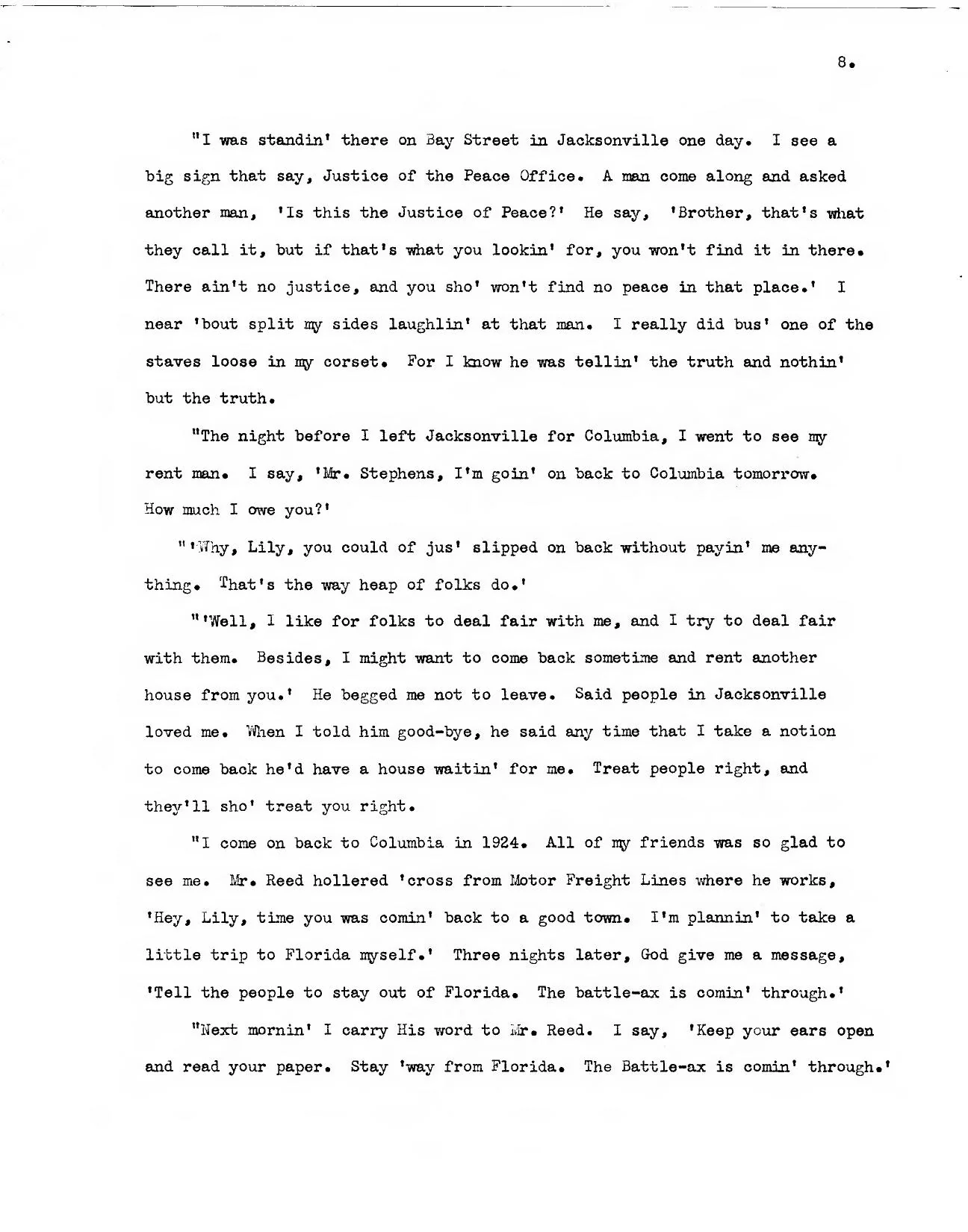
Warning remembered
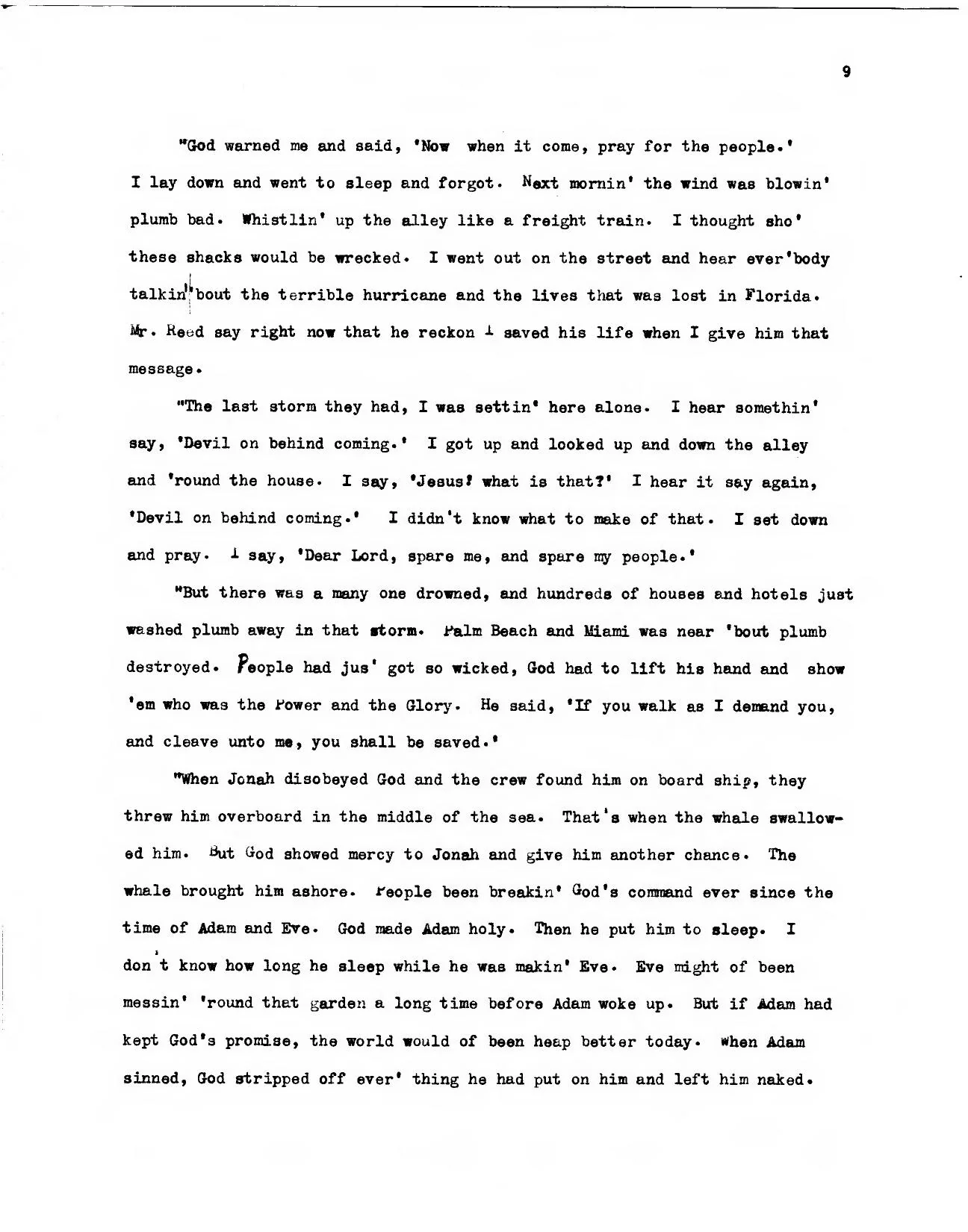
Storm and interpretation
Source: Library of Congress, American Life Histories, “A Holiness Preacher,” item wpalh002090. Complete 11-page federal transcript and the two hurricane-related page images are preserved locally.
Enter the contextual exhibit Open the complete local PDF Library of Congress record ↗
Florida Storm — Judge Jackson’s 1928 hurricane score
Judge Jackson composed this Black Sacred Harp memorial on July 18, 1928. Florida Memory preserves the three-page score and its complete transcript. The five verses name September 18, 1926; destroyed buildings; families searching for children; injured survivors; doctors; and the Red Cross. The chorus joins “the colored and the white” in a shared night of fear without erasing the unequal relief conditions documented elsewhere.
Source: State Library of Florida, Florida Collection 783.954 COL 1973; Florida Memory identifier
flc_783.954-col-1973_01. Florida Memory presents all three score pages with a transcript through the official record below.Examine the three-page score and transcript ↗ Open the official primary-source set and performance ↗
1927 Coast Guard annual report - authenticated federal scan
The complete 72-page Annual Report of the United States Coast Guard for the Fiscal Year Ended June 30, 1927 is preserved locally from GovInfo. Report page 9 supplies the Coast Guard's own published list of hurricane-relief duties, while report page 3 explains that those operations were excluded from routine assistance totals.
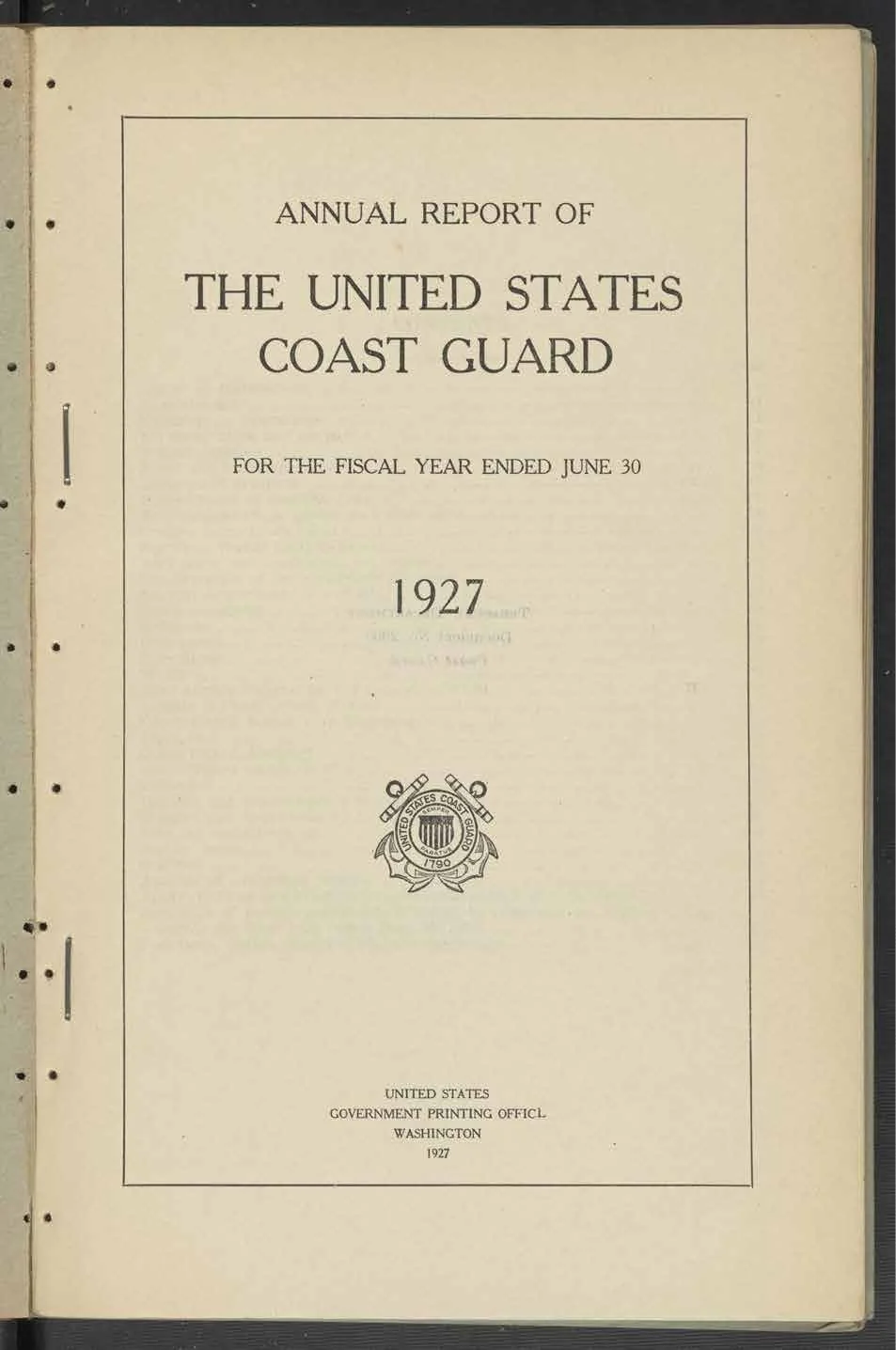
Authenticated title page
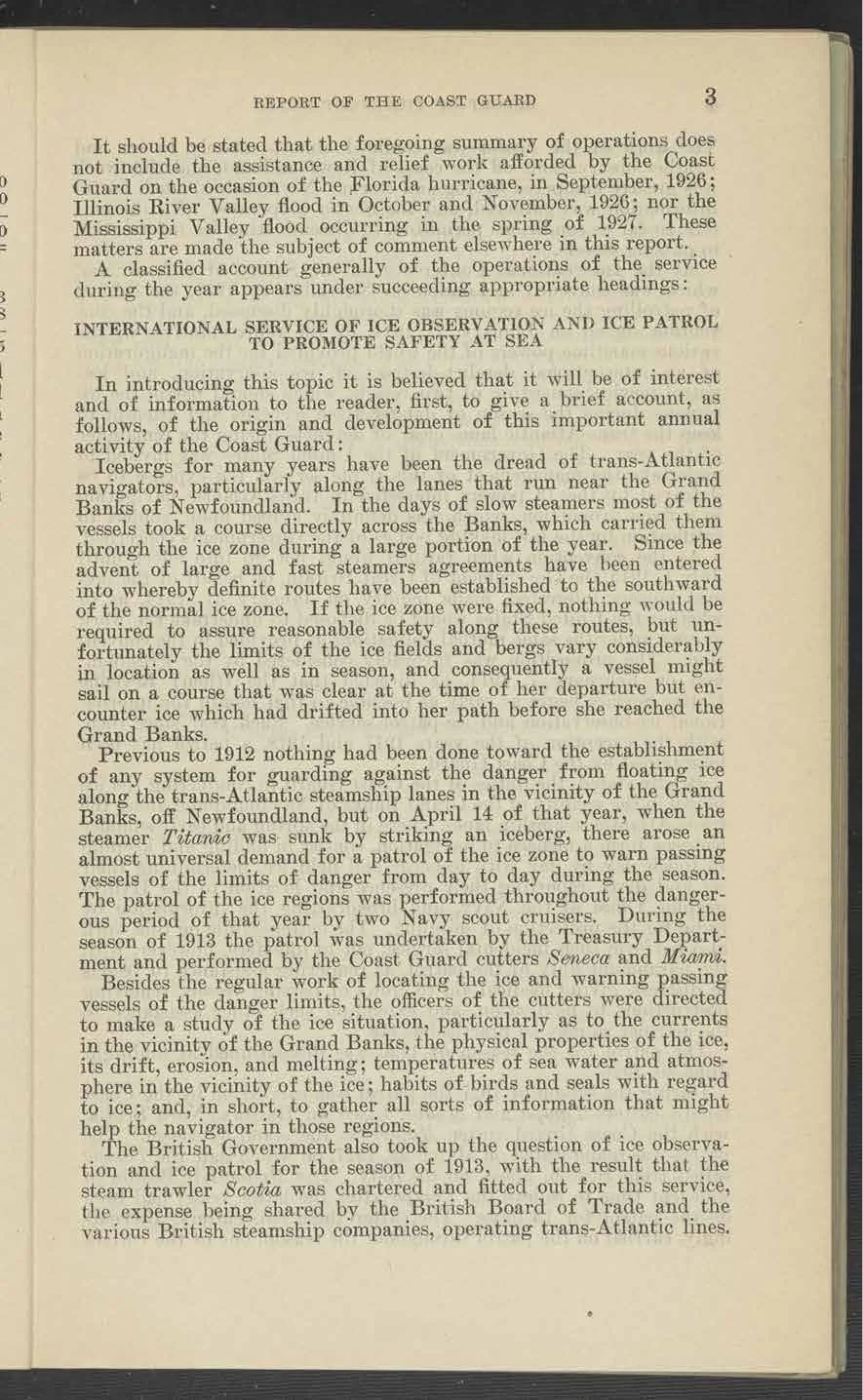
Report page 3 - excluded from routine totals
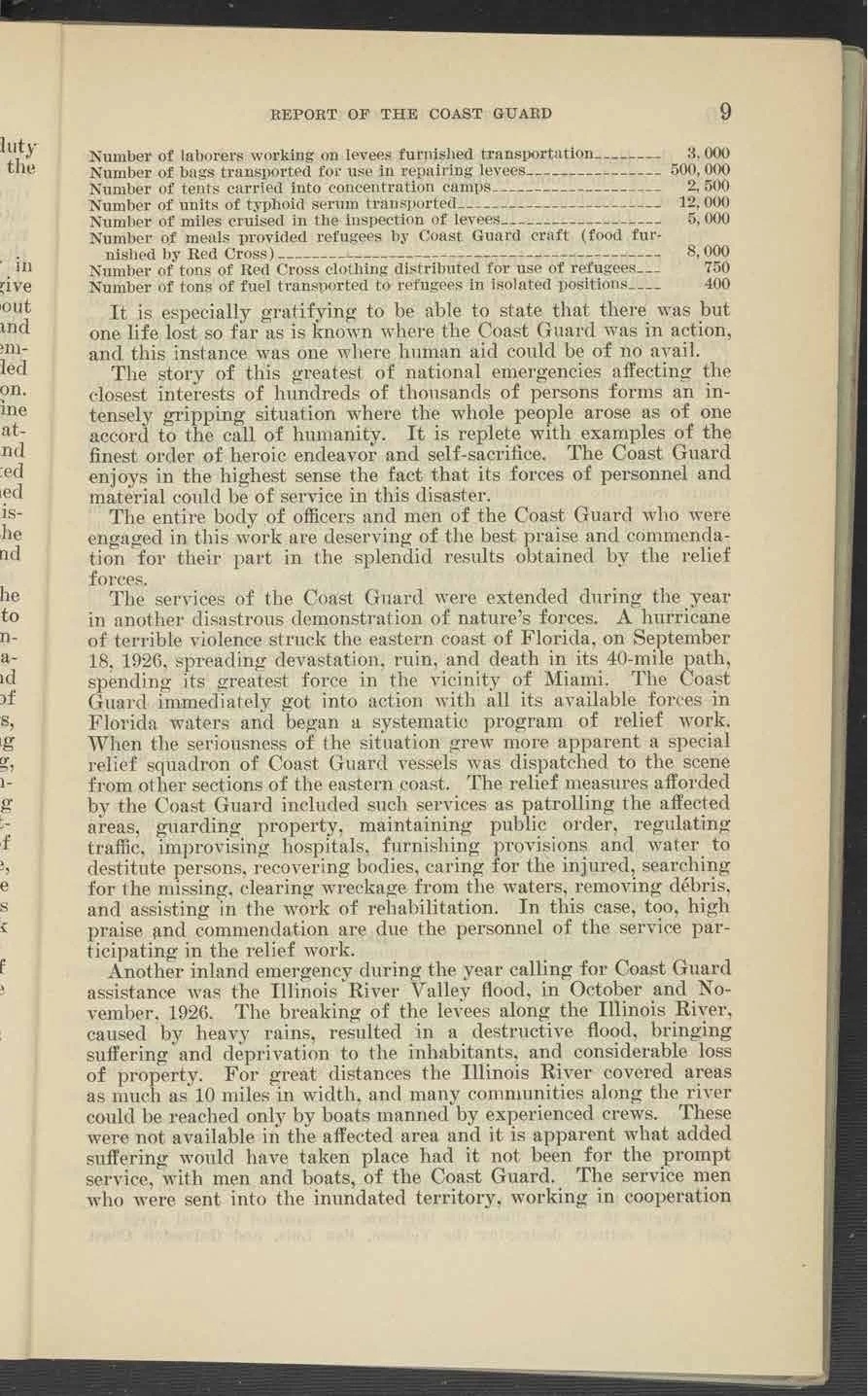
Report page 9 - relief program
About the record: original 1927 federal publication in the U.S. Government Publishing Office collection.
Enter the contextual exhibit Open the complete local PDF GovInfo edition ↗